Basic Information
Description
The quintessential Kyoto landmark — everyone knows it. Its formal name is Rokuon-ji. It started as the Kitayama-dono villa, built by Ashikaga Yoshimitsu in 1397, and was converted into a Zen temple after his death.
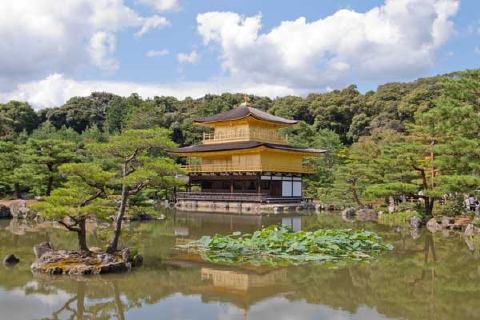
The Golden Pavilion (Shariden) stands at the edge of Kyokochi Pond, its gilded form reflected in the water. The first floor is the Hosui-in, built in the shinden-zukuri aristocratic style. The second floor is the Choon-do, in the buke-zukuri warrior style. The third floor is the Kukkyocho, in the Zen Buddhist hall style. The upper two floors are covered in gold leaf, and a phoenix sits atop the roof. The building is a crystallization of Yoshimitsu's power and aesthetic vision.
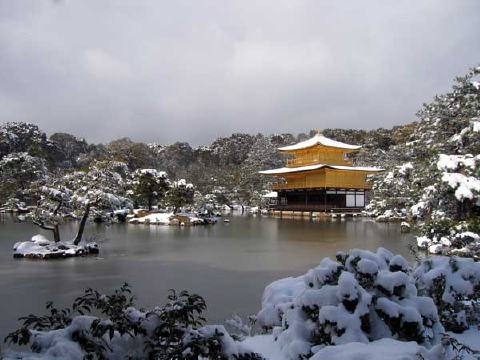
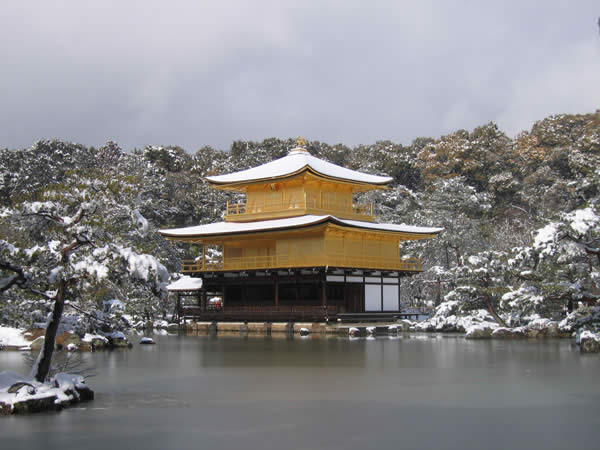
Honestly, it's so famous that your expectations tend to run high — but when you actually see the Golden Pavilion across the pond, it really is stunning. The snow-dusted Kinkaku-ji in winter is breathtakingly beautiful, and anyone who manages to visit on a snowy morning is truly lucky. Autumn is gorgeous too, when the trees around the pond turn red and the contrast of gold against crimson is spectacular.
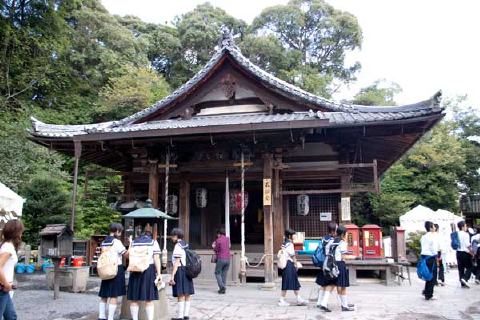
School trip groups tend to leave right after seeing the Golden Pavilion, but I'd really recommend walking deeper into the grounds. You'll find Anmin-taku Pond, a remnant of the Saionji family's garden; Ryumon-baku, a waterfall with the famous "carp stone" arrangement; and up on the high ground to the north, Sekka-tei teahouse. This teahouse is known for its nandina-wood pillar and bush clover alcove shelf, and its name comes from the fact that it was built to enjoy views of the Golden Pavilion at dusk.
The original pavilion was destroyed in 1950 when a young monk set it on fire. The current structure is a 1955 reconstruction. Yukio Mishima's novel The Temple of the Golden Pavilion is based on this incident.