Basic Information
Description
Ginkaku-ji began as the mountain retreat that Ashikaga Yoshimasa built in Higashiyama in 1482. After Yoshimasa's death, it was converted into a Rinzai Zen temple of the Shokoku-ji school.
In stark contrast to Kinkaku-ji's brilliance, Ginkaku-ji carries an introspective, almost meditative air. What Yoshimasa sought by secluding himself here wasn't political power — it was a world of beauty. That understated, wabi quality takes on an entirely different character depending on your mood and the season. Under an overcast winter sky, the Silver Pavilion is truly beautiful.
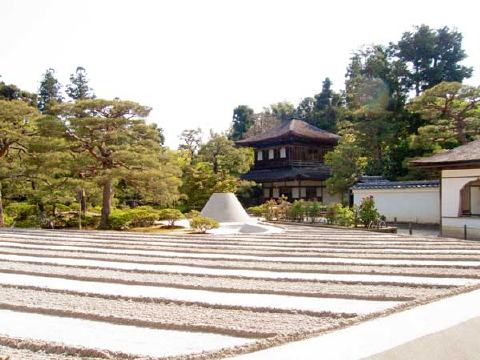
The Silver Pavilion (Kannon-den) is a National Treasure. It has a two-story structure — Zen Buddhist style on the upper floor, residential style on the lower — and while it seems to mirror Kinkaku-ji, it's a completely different kind of building. Despite its name, silver foil was never actually applied; the origin of the name remains debated.
The Togudo hall's Dojinsai room is considered the prototype of the four-and-a-half tatami tea room, and some say this is where the Japanese aesthetic of living spaces truly began.
In front of the main hall, you'll find the Ginshadan (Silver Sand Sea) and the Kogetsudai (Moon-Viewing Platform) — mounds of white sand designed for viewing the moon as it rises over Tsukimachi-yama. Some say the sand was meant to reflect moonlight and illuminate the garden, though nobody knows for certain. Still, just imagining the moon rising over this scene on a clear night makes the visit worthwhile.
The garden is a strolling-style circuit that skillfully uses the hillside. Climb to the top and you'll get a panoramic view of the Silver Pavilion and the Kyoto cityscape below. Walking the mossy, tree-lined mountain path makes you forget the bustle of the tourist crowds. The beauty that was described in the Miyako Meisho Zue as possessing "the art of the immortals" is very much alive today.