Northern Kyoto: Shisen-do & Shugakuin Imperial Villa Walk
Spots on This Course
Course Guide
The main attraction on this course is Shugakuin Imperial Villa.
You can't just walk in — make sure to apply for a visit in advance through the Imperial Household Agency website (http://sankan.kunaicho.go.jp/order/index.html) or at the Kyoto Imperial Palace office. Don't forget!
By bus, your starting point is the Ichijoji-sagarimatsu stop. You can also take the Eizan Railway to Ichijoji Station and walk through the shopping street.
From the Ichijoji-sagarimatsu bus stop, head a little east and you'll reach the famous Ichijoji-sagarimatsu (Descending Pine of Ichijoji) — the spot where Miyamoto Musashi fought Yoshioka Seijuro. There's a stone monument, but the pine tree itself has been replaced many generations over, so that part's a bit disappointing. This was also the place where Kusunoki Masashige set up camp.
Turn right through the residential area and you'll find Kitayama Betsuin and Konpuku-ji. A lot of people haven't heard of Konpuku-ji. It has the graves of Goshun, Keibun, Aoki Getto, and Buson, and it's also connected to Murayama Takajo. It's a small temple, but the garden makes clever use of the hillside — it's interesting. And because of the elevation, you get a panoramic view of the city from the graveyard.
"Uki ware wo sabishigarase yo kankodori" (Basho)
"Yuku haru ya Kyoto wo hitome no haka-dokoro" (Kyoshi)
These poems were composed at Konpuku-ji.
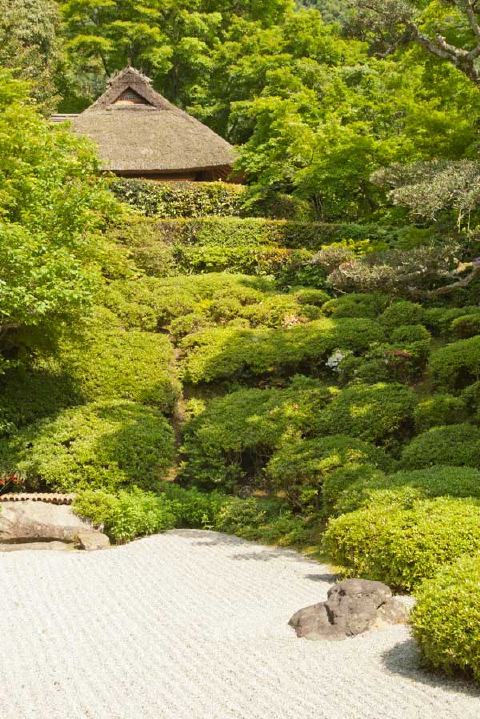
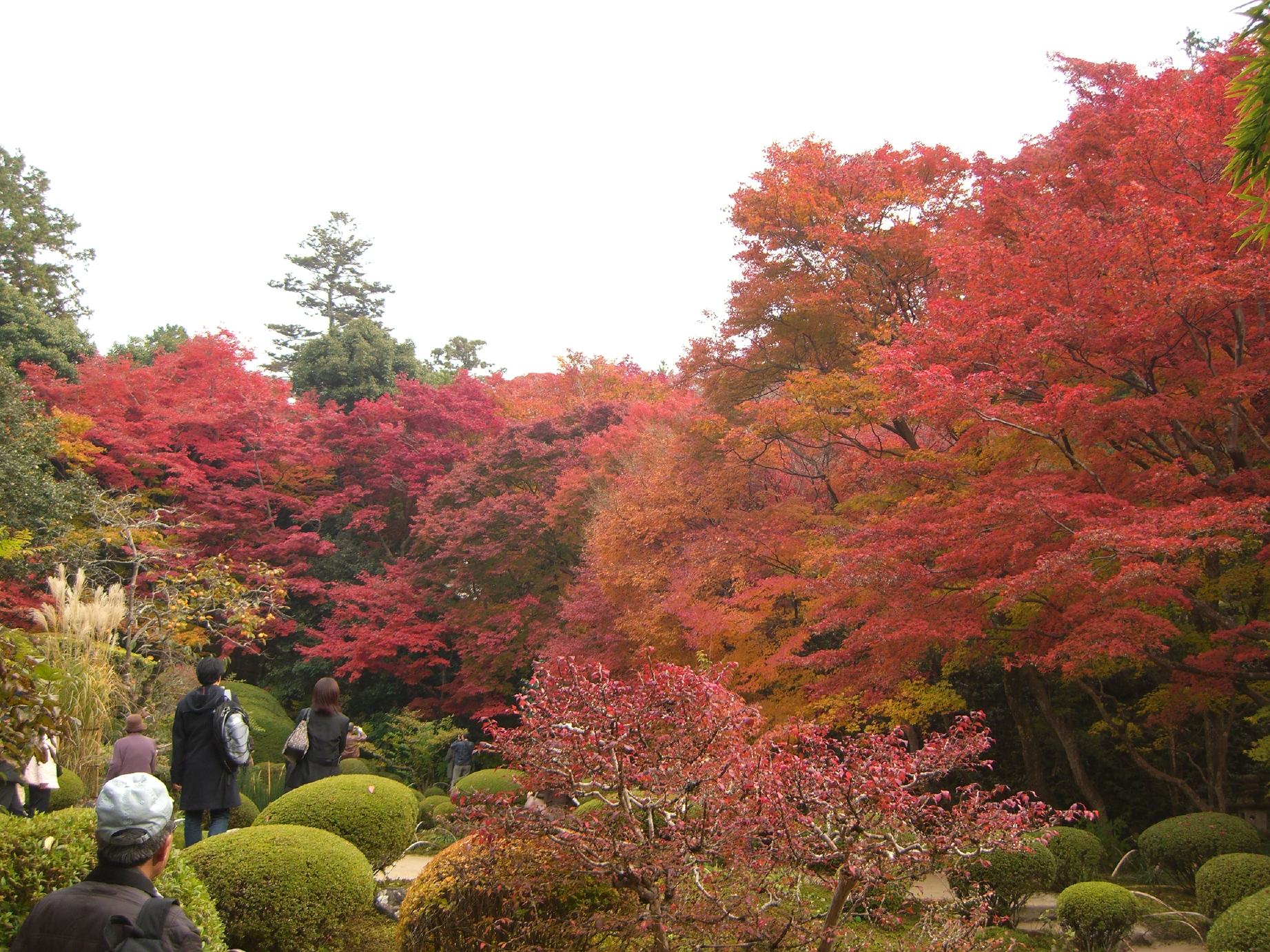
Shisen-do was the mountain retreat of the Edo-period samurai Ishikawa Jozan. The garden, created by Jozan himself (who also worked on the Kikokutei garden), is a really pleasant place. The striking garden of white sand and clipped azaleas is beautiful, and autumn foliage season is great here too. The design of the Shogetsu-ro (Moon-Whistling Tower) is also quite interesting.
From here, you walk along a path through fields with some elevation — it's a really nice, airy walk on your way to Manshu-in.
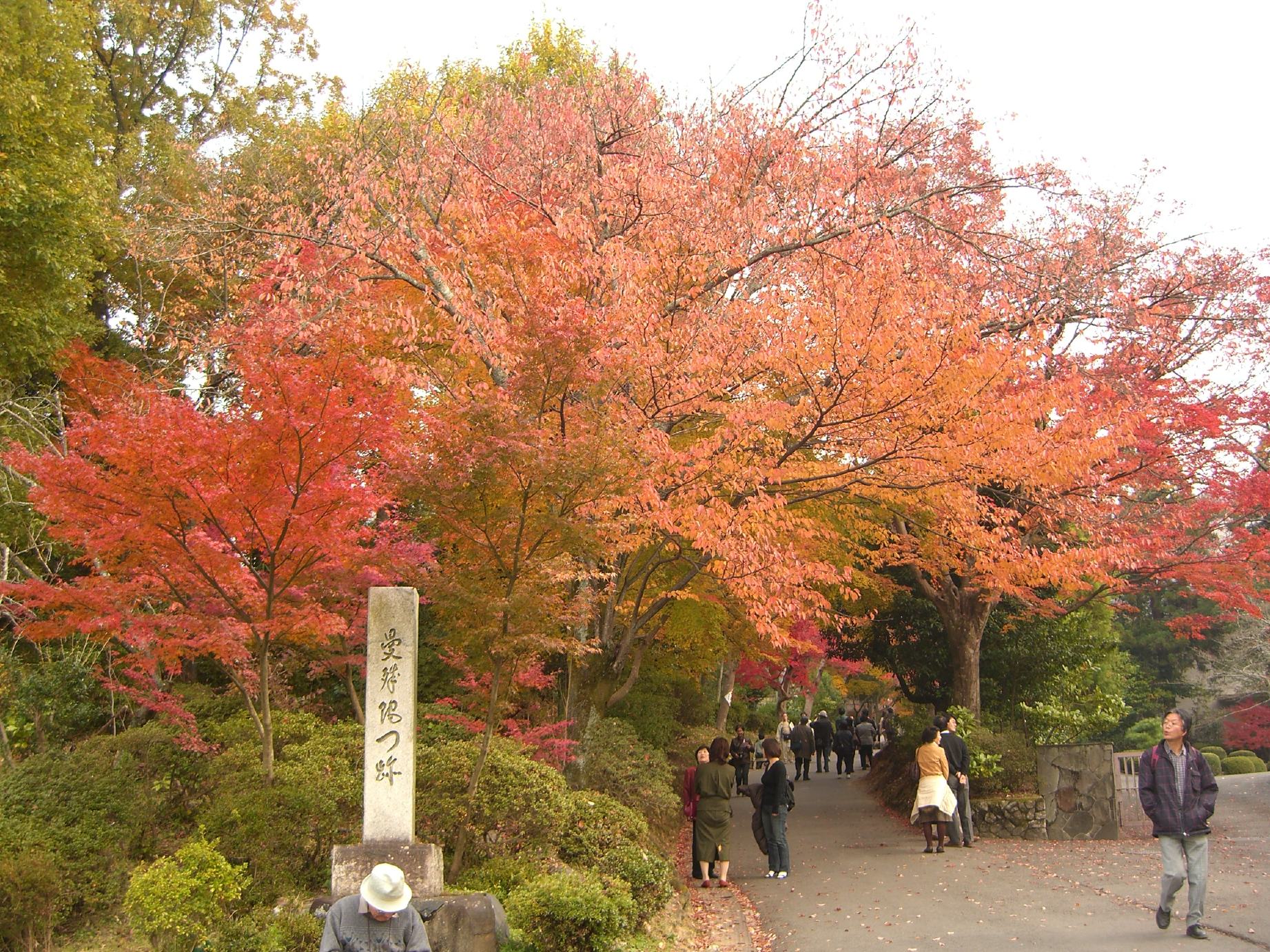
Manshu-in is famous for the autumn leaves at its gate, but the combination of mountains and cherry blossoms is also quite nice in spring. The head priests here traditionally served concurrently as the chief administrators of Kitano Tenmangu, and there's a Tenmangu shrine right in front of Manshu-in's gate. The shrine has a little teahouse (Benten Chaya), and in cherry blossom season you can eat soba outside there.
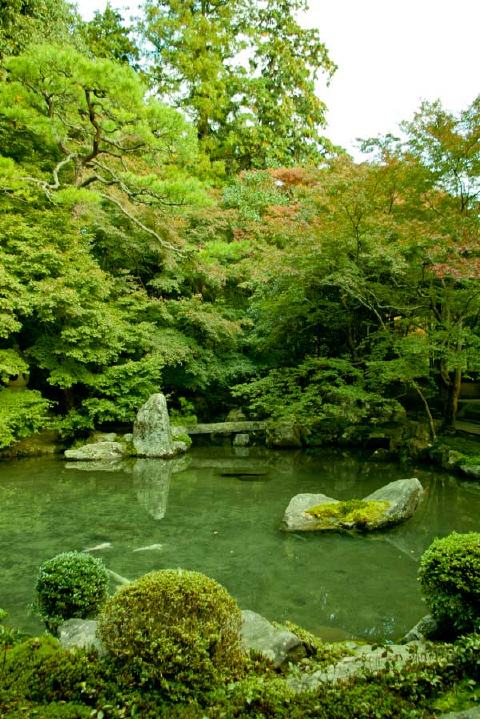
Follow the road north from Manshu-in's gate and you'll reach the Otowa River. It's a shame it's been lined with concrete, but the river sand is white and pretty. This area is called Kirara-zaka (Mica Slope) and is also a trailhead for climbing Mt. Hiei. I think this is the area described at the beginning of Soseki's novel 'The Poppy' (Gubijinso). Cross the river and keep going, and you'll reach Shugakuin Imperial Villa. The application process is a hassle, but the abundant plantings and the garden with its dramatic changes in elevation are truly wonderful.
Detour: If you keep heading north from here, you'll reach Renge-ji, but it's quite a distance, so you might want to head back to Shirakawa-dori and catch a bus at the Shugakuin-Rikyu-michi stop, or head to Shugakuin Station on the Eizan Railway.
Also, the area around Ichijoji Station on the Eizan Railway is one of Japan's most fiercely competitive ramen neighborhoods — Tentenyu, Takayasu, Yume wo Katare, and tons of other famous and not-so-famous ramen shops are all crammed in together.
You can't just walk in — make sure to apply for a visit in advance through the Imperial Household Agency website (http://sankan.kunaicho.go.jp/order/index.html) or at the Kyoto Imperial Palace office. Don't forget!
By bus, your starting point is the Ichijoji-sagarimatsu stop. You can also take the Eizan Railway to Ichijoji Station and walk through the shopping street.
From the Ichijoji-sagarimatsu bus stop, head a little east and you'll reach the famous Ichijoji-sagarimatsu (Descending Pine of Ichijoji) — the spot where Miyamoto Musashi fought Yoshioka Seijuro. There's a stone monument, but the pine tree itself has been replaced many generations over, so that part's a bit disappointing. This was also the place where Kusunoki Masashige set up camp.
Turn right through the residential area and you'll find Kitayama Betsuin and Konpuku-ji. A lot of people haven't heard of Konpuku-ji. It has the graves of Goshun, Keibun, Aoki Getto, and Buson, and it's also connected to Murayama Takajo. It's a small temple, but the garden makes clever use of the hillside — it's interesting. And because of the elevation, you get a panoramic view of the city from the graveyard.
"Uki ware wo sabishigarase yo kankodori" (Basho)
"Yuku haru ya Kyoto wo hitome no haka-dokoro" (Kyoshi)
These poems were composed at Konpuku-ji.
Shisen-do was the mountain retreat of the Edo-period samurai Ishikawa Jozan. The garden, created by Jozan himself (who also worked on the Kikokutei garden), is a really pleasant place. The striking garden of white sand and clipped azaleas is beautiful, and autumn foliage season is great here too. The design of the Shogetsu-ro (Moon-Whistling Tower) is also quite interesting.
From here, you walk along a path through fields with some elevation — it's a really nice, airy walk on your way to Manshu-in.
Manshu-in is famous for the autumn leaves at its gate, but the combination of mountains and cherry blossoms is also quite nice in spring. The head priests here traditionally served concurrently as the chief administrators of Kitano Tenmangu, and there's a Tenmangu shrine right in front of Manshu-in's gate. The shrine has a little teahouse (Benten Chaya), and in cherry blossom season you can eat soba outside there.
Follow the road north from Manshu-in's gate and you'll reach the Otowa River. It's a shame it's been lined with concrete, but the river sand is white and pretty. This area is called Kirara-zaka (Mica Slope) and is also a trailhead for climbing Mt. Hiei. I think this is the area described at the beginning of Soseki's novel 'The Poppy' (Gubijinso). Cross the river and keep going, and you'll reach Shugakuin Imperial Villa. The application process is a hassle, but the abundant plantings and the garden with its dramatic changes in elevation are truly wonderful.
Detour: If you keep heading north from here, you'll reach Renge-ji, but it's quite a distance, so you might want to head back to Shirakawa-dori and catch a bus at the Shugakuin-Rikyu-michi stop, or head to Shugakuin Station on the Eizan Railway.
Also, the area around Ichijoji Station on the Eizan Railway is one of Japan's most fiercely competitive ramen neighborhoods — Tentenyu, Takayasu, Yume wo Katare, and tons of other famous and not-so-famous ramen shops are all crammed in together.